Table of Contents
Ask AI about this Blog
Neo Frame Jumping Hour Watch: A Fusion of History & Innovation
Mehul LakhaniWhen it comes to redefining how we read time, the Audemars Piguet Neo Frame Jumping Hour Watch stands out as an extraordinary blend of horological heritage & contemporary design. At its core, this timepiece is a jumping hour watch, a sophisticated complication that replaces the traditional hour hand with a numerical window that “jumps” from one hour to the next the instant each hour concludes.
This concept might seem simple visually, but it’s deeply rooted in centuries-old watchmaking tradition, dating back to early clock mechanisms where clarity of time was crucial, especially in low light. The Neo Frame brings that classic functionality into the modern era with an elegant rectangular frame & groundbreaking design language that feels both nostalgic and incredibly fresh.
Understanding the Basics: What Makes It Different
At first glance, the Neo Frame Jumping Hour isn’t your typical wristwatch. Instead of hands sweeping over a dial, time is shown through windows: a rectangular aperture for the hour, and a curved opening for the minutes. This format c, called guichet display, gives the watch an almost digital aesthetic while still being fully mechanical.

Unlike most traditional watches, where the hour hand slowly progresses around the dial, the jumping hour mechanism instantly switches the hour numerals at exactly 60 minutes, creating a crisp and satisfying transition. The minutes are displayed on a separate disc that moves continuously, making the entire experience intuitive and visually elegant.
Physically, the case is a refined rectangle in 18-carat pink gold, measuring approximately 34 mm wide and around 47 mm lug-to-lug, with a slim profile under 9 mm thick. Its slender proportions make it comfortable on the wrist while preserving an unmistakably vintage silhouette.
When Was It Launched? A Modern Tribute to a Classic
The Neo Frame Jumping Hour was officially introduced in early February 2026, marking an important milestone in Audemars Piguet’s long history of innovation and design exploration.
While the concept of a jumping hour isn’t new, AP actually produced very rare jumping hour watches in the late 1920s. This is the first time the brand has brought the complication into a modern, self-winding Moissanite Wrist Watch with contemporary engineering and finishing.
In many ways, the Neo Frame acts as both a homage and a bold step forward, showing that classic complications can still feel relevant when reimagined with current materials and design sensibilities.
Distinctive Characteristics: What Sets It Apart
One of the most striking aspects of the Neo Frame is its Two Tone aesthetic: the warm tones of pink gold contrast dramatically with the deep black of a PVD-treated sapphire crystal that forms the visible “dial.”

Instead of a conventional dial, the watch uses a piece of black sapphire crystal treated with PVD to achieve a glossy yet deep visual effect bonded directly to the movement plate. This minimalist approach strips away unnecessary elements and focuses attention on the time display.
The rectangular case is flanked by decorative gadroons, vertical fluted motifs that add texture and a nod to Art Deco aesthetics, while the integrated black calfskin strap flows seamlessly from the lugs, emphasizing the piece’s architectural purity.
Visually, the watch exudes refinement without ostentation: time is read clearly yet elegantly through the dual apertures, and the discreet AP signature reinforces the understated luxury.
Inside: Mechanism and How It Works

At the heart of the Neo Frame Jumping Hour is the in-house Calibre 7122, marking Audemars Piguet’s first automatic movement specifically engineered for a jumping hour display.
This movement builds on the architecture of the Calibre 7121, a respected automatic movement used in other AP Moissanite Watch models, but incorporates a bespoke mechanism that allows the hour numeral to jump cleanly at the end of each hour while keeping the minutes wheel ticking smoothly.
Running at 4 Hz (28,800 vibrations per hour) with a power reserve of about 52 hours, the calibre uses materials like titanium for the hour disc and aluminium for the minute disc to balance weight, inertia, and energy efficiency. A patented shock-absorbing system helps prevent accidental jumps from impacting a critical feature for daily wear.
From the sapphire caseback, owners can admire traditional haute horlogerie finishing, including Geneva stripes and polished bevels, along with a dedicated pink gold rotor that matches the case aesthetic.
Availability & Price: Timing Your Purchase
The Neo Frame Jumping Hour is part of Audemars Piguet’s regular collection (not a limited edition), making it one of the brand’s new staple models for collectors. That's available now at Audemars Piguet houses and authorized dealers worldwide.
Pricing differs slightly depending on region and retail channel, but typical figures put it around €65,400 in Europe or approximately $71,200 in some markets for the 15245OR reference.

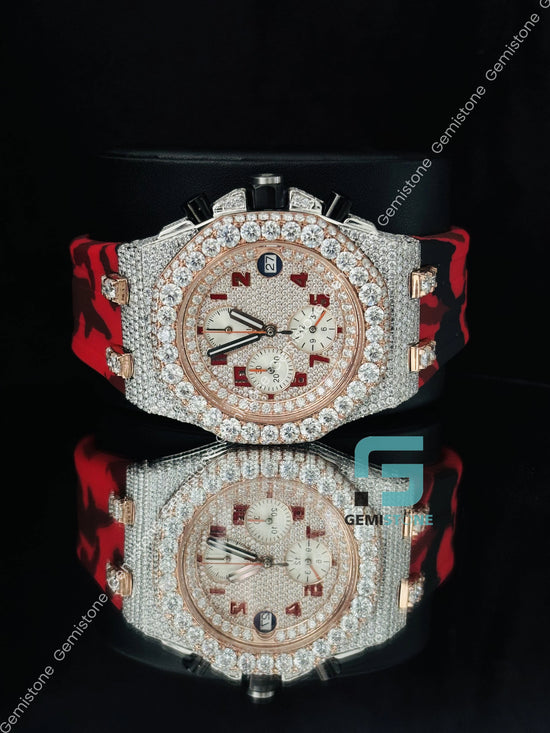
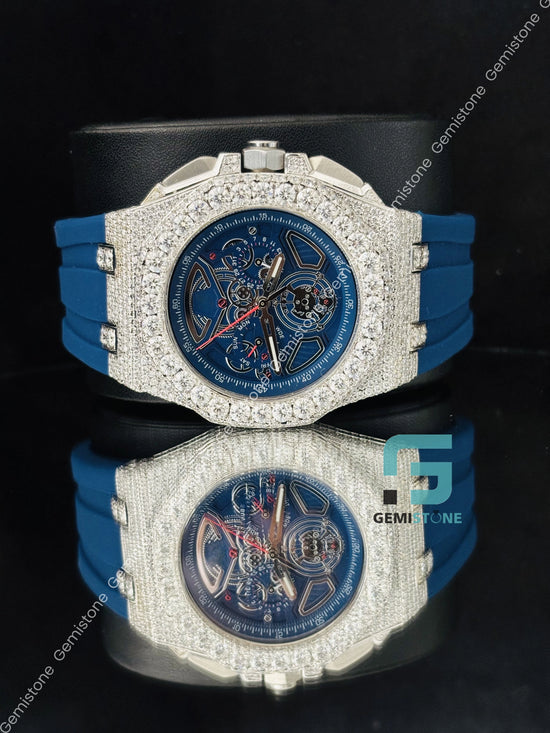
Because it is a highly sought-after new release from a major haute horlogerie house, availability may be limited initially, with waiting lists in multiple cities. It's best to visit an Audemars Piguet House or boutique early if you're truly interested in adding this piece to your watch collection. This watch can be customized with a Moissanite Stone setting, and for more kinds of AP Moissanite Watch designs at low prices, visit Gemistone.com.
Final Thoughts: A Timepiece for Modern Collectors
The Neo Frame Jumping Hour stands as a refined expression of contemporary horology rather than a conventional wristwatch. By reimagining a historic complication through modern design and engineering, it offers a unique way to experience time, intellectually, artistically, and effortlessly elegant. Every detail reflects a thoughtful balance between innovation and tradition.
For today's collectors and mechanical enthusiasts, this watch represents more than just technical excellence. It demonstrates how imaginative design and precise craftsmanship can evolve centuries-old watchmaking challenges into a forward-looking creation, all while preserving the character and soul that define true mechanical artistry.